

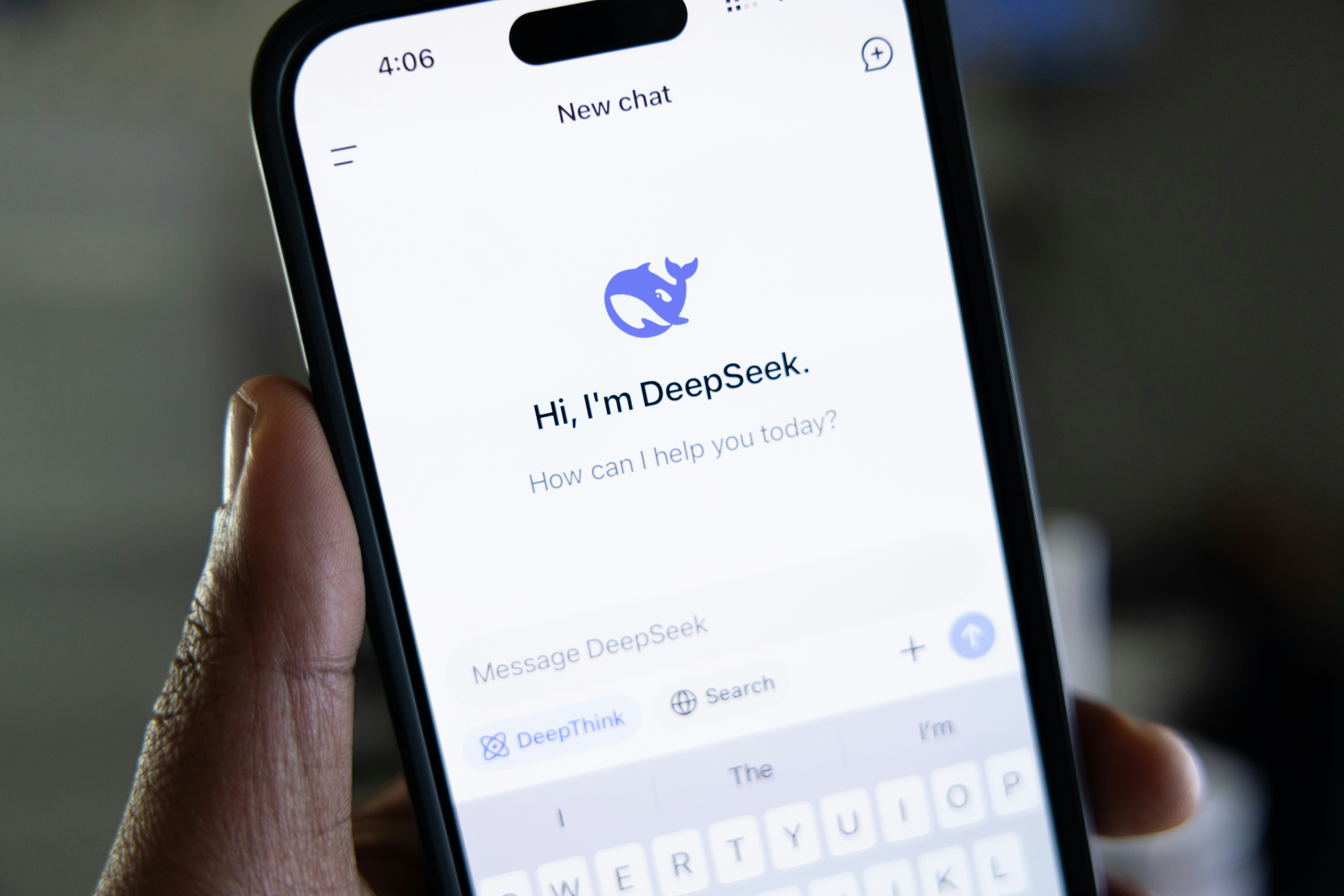
Yesterday, a Chinese AI lab released a new model. Chances are you didn't hear about it on the news, and if you did, it was buried somewhere between a headline about the US elections and a recap of last night's football. That's a shame. Because what DeepSeek just did — quietly, without a product launch keynote or a single celebrity endorsement — matters more to your financial future than most things you've read this week.
I want to explain why. And I want to do it in plain English, because the people who benefit most from this release are exactly the ones who typically tune out when the conversation starts with "parameter count" and "inference cost."
So let's start from the beginning.
What DeepSeek Actually Is (For People Who've Never Heard of It)
DeepSeek is a Chinese AI research company. They've been releasing AI models for a couple of years now, and every single time they do, they follow the same pattern: the model is nearly as good as the best American ones, it costs a fraction of the price to use, and they publish the thing openly so that anyone in the world can download it and run it themselves.
That last part — publishing it openly — is not normal. OpenAI doesn't do it. Anthropic, the company behind Claude, doesn't do it. Google doesn't do it. They build their models, keep the recipe secret, and charge you to access the finished product via an API. DeepSeek does the opposite. They release the weights — the actual mathematical structure of the model — for anyone to use, modify, or run on their own hardware.
Yesterday, April 24, 2026, they did it again. They released DeepSeek V4.
What's New in V4 — In Terms You Don't Need a PhD For
DeepSeek V4 comes in two flavours. There's V4-Pro, the big one, built for coding and complex reasoning tasks. And there's V4-Flash, the smaller, faster, cheaper one designed for situations where you need a quick answer rather than a deep analysis.
V4-Pro, according to DeepSeek's own benchmarks — and confirmed by early independent testers — beats every other open-source model currently available on maths and coding tasks. It doesn't beat the very best closed American models by a huge margin, but it gets close enough that for most everyday coding tasks, the difference is barely noticeable.
Now here's the part that matters. The price.
OpenAI charges $30 for every million tokens of output from its best model. Anthropic charges $25. DeepSeek V4-Pro charges $3.48. V4-Flash charges $0.28. That's not a typo.
If you're not familiar with the concept of tokens: think of a token as roughly three-quarters of a word. A million tokens is a very long conversation — the kind that would take hours of heavy professional use. OpenAI charges $30 for that. DeepSeek charges $3.48. The math isn't complicated: you get roughly the same quality for about one tenth of the price.
And with V4-Flash? You get a genuinely capable coding assistant for $0.28 per million tokens. We are now in the territory where running a month of AI-powered coding could cost you less than a coffee. Not metaphorically. Literally.
Why This Changes Things for People Who Want to Build Software
A few days ago I wrote about vibe coding — the idea that you can now build real software by just describing what you want in plain language and letting an AI handle the code. The tools that make this possible (Cursor, Bolt, Lovable, and others) don't write the code themselves. They're interfaces. Under the hood, they're calling one of these AI models — sending your description to OpenAI, or Anthropic, or now potentially DeepSeek, and getting code back.
When those underlying models are expensive, the tools have to pass that cost on to you somehow. Either through subscription prices that are higher than they look, or through usage limits that kick in right when you're most productive, or through decisions to use a cheaper, dumber model for certain tasks without telling you. The AI quality ceiling you experience as a user is, to a large degree, a cost ceiling in disguise.
When the underlying model costs ten times less, those constraints start to loosen. Tools can afford to let you use more. They can afford to use the better model more often. They can afford to bring their subscription price down. The cascade of benefits flows downstream from one pricing decision made by a research lab in Hangzhou.
If you haven't set up DeepSeek yet and want to try it yourself, we've put together a step-by-step guide for VS Code — from API key to first working query in under 20 minutes.
That's not speculation. We've seen it happen before. DeepSeek's earlier models — V3 and R1 — triggered a price war across the entire AI industry within weeks of their release. OpenAI cut prices. Anthropic became more aggressive on API pricing. Google followed. Competition is a funny thing: it works best when someone is willing to go first, and DeepSeek keeps going first.
The Social Elevator Just Got a New Floor
I want to revisit an idea I explored recently: the social elevator. The argument was simple. Learning to code used to cost years of your time or tens of thousands of dollars in tuition. Vibe coding collapsed that barrier. For $20-30 a month, someone with no technical background could build and ship real software. The elevator was already running.
But there was a quiet limit that nobody talked about much. The $20-a-month tools that power vibe coding are accessible to someone in London or Berlin or New York. They're a stretch for someone in Nairobi or Bogotá or Manila, where $20 represents a much larger slice of a monthly income. The financial democratization was real, but it wasn't complete.
V4-Flash at $0.28 per million tokens changes the calculation. We are approaching the point where the cost of the AI itself — the actual intelligence behind the coding tool — is negligible. When the raw material costs almost nothing, the tools built on top of it get cheaper too. And when the tools get cheap enough, they stop being "accessible to people in rich countries" and start being "accessible to anyone with internet."
That's a different kind of door opening. Not just a crack wider — a different door altogether.
Open Source: The Part Most People Miss
The price story is compelling enough on its own. But the open-source part of DeepSeek's release is actually the more important detail, and it's the one that tends to get lost in the coverage.
When OpenAI or Anthropic release a model, you have one option: pay them to use it. If their servers go down, you wait. If they decide to change the pricing, you adjust. If they decide to restrict certain types of use, you comply or leave. You are a customer of a service, not an owner of a tool.
When DeepSeek releases a model openly, a completely different set of possibilities opens up. A startup in India can download V4 and run it on their own servers, paying nothing to DeepSeek, owning the infrastructure entirely. A university in Brazil can deploy it for students at near-zero marginal cost. A developer in Vietnam can build a product on top of it and not worry about a pricing change from a company in San Francisco wiping out their margins overnight.
Open source is what turns a cost reduction into permanent infrastructure. The cheap price is great. The fact that you can own the thing outright — that's what makes it structural rather than temporary.
What About the American AI Companies?
This is the question everyone is quietly thinking but not many are asking out loud: if DeepSeek can build something this capable for this price, what does that mean for OpenAI and Anthropic and Google?
The honest answer is that the American labs aren't sitting still. They have access to more data, more compute, more talent, and more capital than DeepSeek. Claude and GPT-4-class models still have edges in certain areas — particularly complex multi-step reasoning, nuanced writing, and the kinds of tasks that require very long-range context handling. The gap hasn't closed completely.
But here's the thing: for the majority of coding tasks — the ones that vibe coders actually do day to day — "close enough" is close enough. Building a landing page doesn't require the world's best reasoning model. Writing a function to process a CSV file doesn't require frontier-level intelligence. The tasks that matter most for the social elevator are precisely the ones where V4 already performs well enough that the quality difference is irrelevant.
What DeepSeek does every time it releases a model is not defeat the American labs. It forces them to compete on price. And every time American labs compete on price, the people who win are the users. Particularly the users who were previously priced out.
The Version of This Story That Matters
Let me tell you the version of this story I actually care about.
Somewhere in the world right now, there's a person with a product idea. They're not a developer. They've never written a line of code. They've been sitting on this idea for two years because every time they research how to build it, the answer comes back as either "hire engineers" (expensive) or "learn to code" (two years of work before they can even test whether the idea is good).
The vibe coding revolution already told that person: you don't need to do either of those things anymore. Describe what you want, iterate with an AI, ship it. But the $20 monthly subscription was still a real decision for some of them. A decision they might have said no to.
DeepSeek V4 is one more step in the direction where that decision becomes trivially easy to say yes to. Where the monthly cost of building software professionally is the price of a bus ticket rather than the price of a dinner. Where the question isn't "can I afford to try this?" but just "do I want to?"
That sounds like a small shift. It isn't. The number of people on this planet who have ideas worth building but can't afford to try is enormous. Every time the cost drops by an order of magnitude, that number shrinks. And every time that number shrinks, the world gets a little more of the innovation it has been quietly leaving on the table.
I don't know if DeepSeek V4 is the best model you can use today. It's probably not, for the most demanding tasks. But I'm increasingly convinced that the most important AI releases aren't the ones that push the frontier — they're the ones that pull the floor up. V4 pulled the floor up. Again. That matters.