

There is a pattern in tech that plays out so reliably it should have a name. A team of brilliant, obsessive builders ships something genuinely new. Developers fall in love with it. The product grows on merit alone — no algorithmic tricks, no growth hacking, just word of mouth from people who say "this actually changes how I work." And then, almost on cue, a giant arrives with a checkbook and an offer that's very, very hard to refuse.
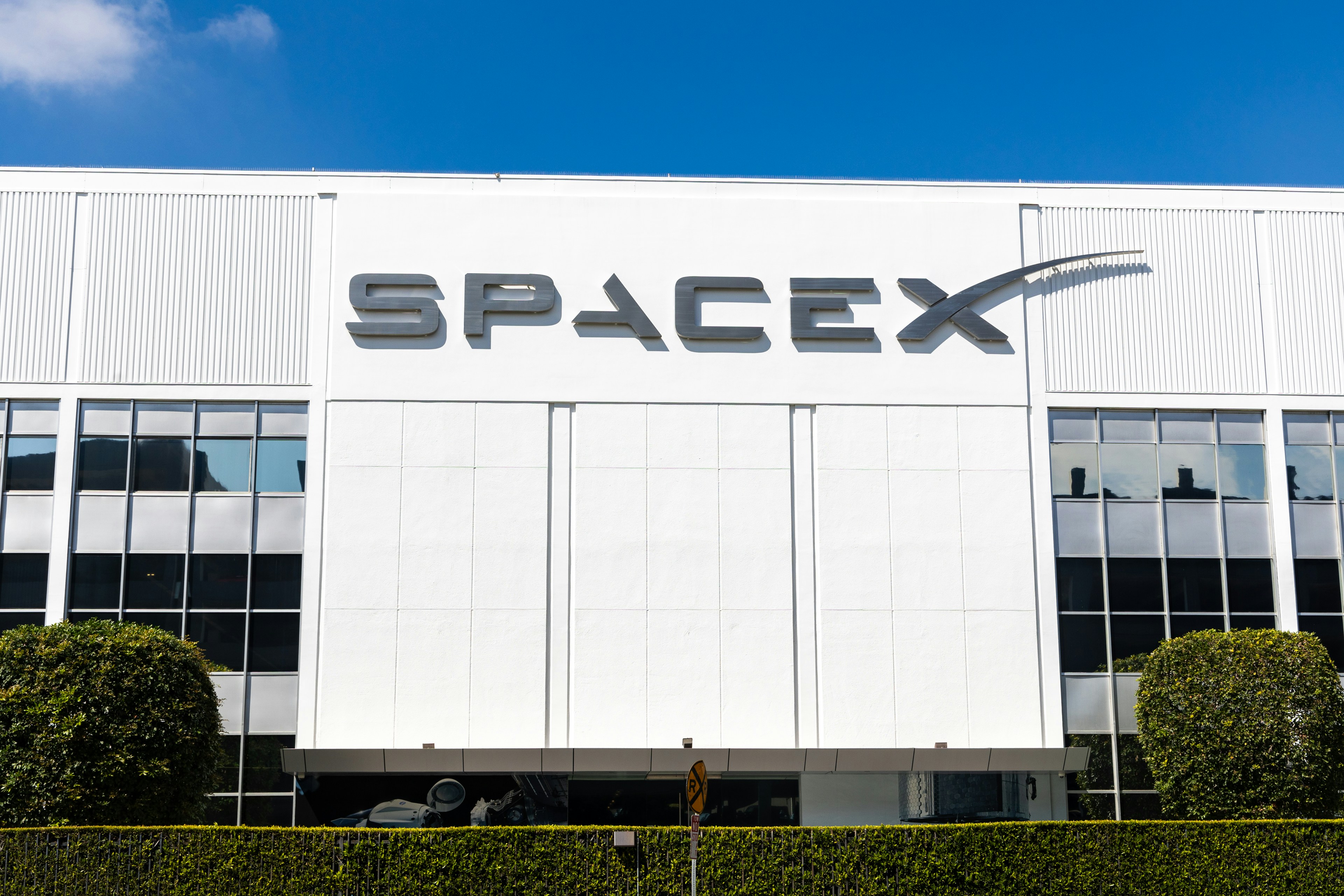
That pattern may be happening again. According to multiple sources familiar with the situation, SpaceX has been in advanced talks to acquire Cursor — the AI-native code editor built by Anysphere that has become, in a remarkably short time, one of the most genuinely beloved tools in the developer ecosystem. I want to talk about that. And I want to be honest about how it makes me feel.
What We Know About the Deal
The reported terms, as they've emerged through sources close to both parties, are substantial. We're talking about a valuation in the multi-billion range — numbers that would represent a staggering return on what Anysphere has built in just a few years of existence. The structure being discussed reportedly involves a mix of cash and equity, with key members of the founding team subject to multi-year retention packages. Standard acquisition playbook.
The strategic rationale from SpaceX's perspective is legible, if a little unsettling: Elon Musk's empire is increasingly built on software infrastructure — Starlink, satellite operations, autonomous systems, and xAI's own ambitions in the AI space. A world-class AI coding tool embedded into that ecosystem would accelerate engineering velocity across every SpaceX and affiliated product. Cursor isn't just a text editor with autocomplete. It's a reasoning layer on top of a codebase. For an organization as engineering-dense as SpaceX, that's not a feature. That's a weapon.
As of this writing, neither Anysphere nor SpaceX has confirmed the deal. But the signals are strong enough that the developer community is already reacting — and not quietly.
A Familiar Story, and a Frustrating One
I'll be direct: this news makes me sad. Not because acquisitions are inherently bad, and not because I think the Anysphere team owes the developer community anything. But because we've watched this movie before — many times — and we know how it usually ends.
The tech oligarchy doesn't expand. It absorbs. It functions less like a market and more like a gravitational field — every new center of mass that forms around genuine innovation eventually gets pulled in, orbiting the same handful of giants that have been there for decades.
Think about it. GitHub was independent and beloved. Then Microsoft. Figma was the rare design tool that genuinely threatened Adobe's dominance from outside. Then Adobe tried to buy it (blocked by regulators, and still counting). Slack was a real alternative to enterprise communication software built on inertia. Then Salesforce. Wiz, the cloud security company that defined a new category, nearly went to Google for $23 billion before choosing to IPO. The list goes on, and the pattern never really changes.
These aren't coincidences. They're the natural result of a market where the winners have accumulated capital, distribution, and data advantages so enormous that it becomes nearly impossible for any new entrant to compete long-term on pure merit. So instead of competing, the giants wait — they let the scrappy teams do the hard creative work, prove the idea, build the community — and then they acquire the result. Innovation gets funded, yes. But the fruits of that innovation tend to flow upward, into the same concentrated hands, every single time.
It's like watching a black hole not because it's malevolent, but because that's simply what black holes do. They pull. And the more mass they accumulate, the stronger the pull becomes. What frustrates me isn't the physics of it. It's that we keep acting surprised.
But Cursor Didn't Need Them
What makes this particular acquisition rumor especially hard to swallow is the context. Cursor didn't need rescuing. It wasn't a struggling startup with a good idea and no path to revenue. It was a product that had cracked something real — an AI-native development environment that actually made developers faster and, more importantly, kept them in a state of creative flow rather than constant context-switching.
The growth Anysphere achieved was almost entirely organic. Developers shared Cursor the way they used to share Stack Overflow links — not as a product endorsement, but as a genuine answer to a real problem. "Just use Cursor" became a reflex response to questions about coding productivity in the same way "just use VSCode" had been for a decade before. That kind of trust, built without a massive marketing budget, without an enterprise sales team, without being bundled into something people were already paying for — that's rare. That's legitimately hard to replicate.
The team at Anysphere demonstrated something important: you can compete at the frontier of AI tooling without being backed by a trillion-dollar parent company. You can attract the best engineering talent, ship fast, and build something people actually want to use — all while remaining independent. That shouldn't be remarkable in 2026. But somehow it still is.
And now that example of independence may be about to end.
The Dilemma Nobody Wants to Admit Is Real
Here's where I try to be honest with myself, and with you: if I were in the founders' position, I genuinely don't know what I would do.
The money being discussed — if the reports are accurate — is the kind of number that doesn't just change your life. It changes your family's trajectory for generations. It eliminates a category of human stress that most people live with every day. It means your parents never have to worry about anything again. It means you can fund whatever you want to build next with no external dependencies, on your own terms, forever. That is not a small thing. Anyone who waves it away as "selling out" has probably never had to make a decision at that scale with that kind of pressure.
And yet.
There's a version of this where you say no, and you stay independent, and you keep building Cursor as the thing it was always meant to be — a tool for developers, shaped by what developers need, not by what fits a roadmap in Hawthorne, California. There's a version where that decision turns out to be the right one — where Cursor grows into a platform, where the community deepens, where being the independent option in a world of consolidated giants becomes a competitive advantage rather than a vulnerability. It happened with Notion, at least for a while. It's happened with Figma in the period after the Adobe deal collapsed. Independence isn't a guaranteed failure mode.
Both options are valid. I genuinely believe that. There is no objectively correct answer here, and I'm not going to pretend otherwise. What I will say is that the choice itself — the fact that we've constructed a technological ecosystem where this choice even has to be made — is something worth sitting with.
The Oligarchy That Won't Break
The deeper issue isn't Cursor. It's the shape of the landscape that makes every conversation like this feel inevitable.
We have a handful of companies — call them what you want, but the names are obvious — that now control the cloud infrastructure most software runs on, the distribution channels most software is discovered through, the AI models most applications are built with, and the capital that funds the teams building alternatives to all of the above. That's a kind of structural consolidation that doesn't resolve itself through market forces alone. Markets tend to optimize toward efficiency, and at scale, consolidation often looks like efficiency — right up until it doesn't.
What would actually break this pattern? Probably a combination of regulatory pressure (which is slow, patchwork, and politically inconsistent), open-source alternatives maturing to the point where they genuinely threaten closed ecosystems (possible, but harder than it sounds), and a generation of founders who choose independence not as a romantic gesture but as a deliberate strategic bet (encouraging, but rare). None of these are quick. None of them are certain.
In the meantime, the gravity keeps pulling.
I hope the Anysphere founders make the decision that's right for them — whatever that turns out to be. They've earned the right to make it on their own terms, and that includes the right to say yes to a life-changing offer without anyone calling it a betrayal. But I also hope they know that the community they built believes in what Cursor was when it was nobody's but theirs. That's not nothing. That might, in the end, be the most valuable thing they have.
What would you do? I've been asking myself that question since the first reports surfaced, and I still don't have a clean answer. Maybe that's the point. Maybe the hardest choices are the ones where every option is defensible — and the only thing you're really deciding is what kind of story you want to tell about yourself afterward.