


There's a lot of writing out there about how cheap it is to build things with AI. Most of it is true. Almost none of it shows you the actual receipts.
This is the actual receipts.
Pickurai launched at the end of April 2026. Three weeks of active building. One finished product. Total cost: $115. Here's how that number breaks down, where I got it wrong, and what I'm doing differently starting next month.
The Full Cost Breakdown
Two numbers made up this project's entire budget: the cost of a domain and the cost of talking to Claude.
| What | Plan / notes | Attributed cost |
|---|---|---|
| Claude Pro | $20/month × 2 weeks | $10 |
| Claude Max x5 | $80/month × 1 week | $20 |
| Domain (pickurai.ai) | Annual, one-time | $85 |
| Hosting (Netlify) | Free tier | $0 |
| Logo & AI images (Gemini) | Free tier | $0 |
| Stock photos (Unsplash) | Free | $0 |
| Total | $115 |
These are prorated amounts — not the full subscription fees I paid. I used Claude Pro for two weeks out of four, so the attributed cost is half the monthly plan: $10. Same logic for Max x5: one week of use equals a quarter of the $80/month subscription: $20. I'm only counting what I actually consumed.
The domain was $85 for the year. Spread over twelve months, that's $7 a month. It's also the biggest line item in this breakdown, which feels right and a little absurd at the same time.
Hosting is zero. Netlify's free tier handles static sites with the kind of reliability you'd normally expect to pay for. That's not a hack — it's just how the market works in 2026.
The logo and several AI-generated images came from Gemini's free tier — no Midjourney subscription, no stock photo licence. For the rest of the article images, Unsplash covers it: free, high quality, no attribution wall. Between the two, the visual layer of a full website costs exactly nothing.
What This Would Have Cost Three Years Ago
Without AI, Pickurai doesn't get built. Not at $115. Not by me.
The honest version of this: I'm not a developer. I understand products. I understand users. I understand what problems are worth solving. What I don't have is the ability to write production code from scratch, wire up an interactive quiz, build a comparison engine, and maintain all of it without help.
Before AI coding tools, I had three options:
- Hire a freelancer. €5,000 to €20,000 minimum for this scope. Months of back-and-forth. Unclear ownership. No guarantee the person you hire in week one is still responsive in week eight.
- Hire an agency. €20,000 to €50,000. More structure. Also more meetings, more revisions, more waiting. A timeline measured in months, not weeks.
- Learn to code. Two years minimum to reach production-ready standard. I'd still be on week three of JavaScript tutorials.
None of those paths would have produced Pickurai. The project would have lived and died as a Notion document with a promising title.
In 2026, I opened VS Code, installed Claude Code, and started building. Three weeks later, the site was live.
The barrier to entry for software didn't drop. It collapsed.
From Pro to Max: What That Upgrade Actually Bought Me
The first two weeks ran on Claude Pro. Twenty dollars a month, prorated to ten. For early exploration — mapping out the architecture, writing the first templates, iterating on ideas — it was enough.
Then the rate limits arrived.
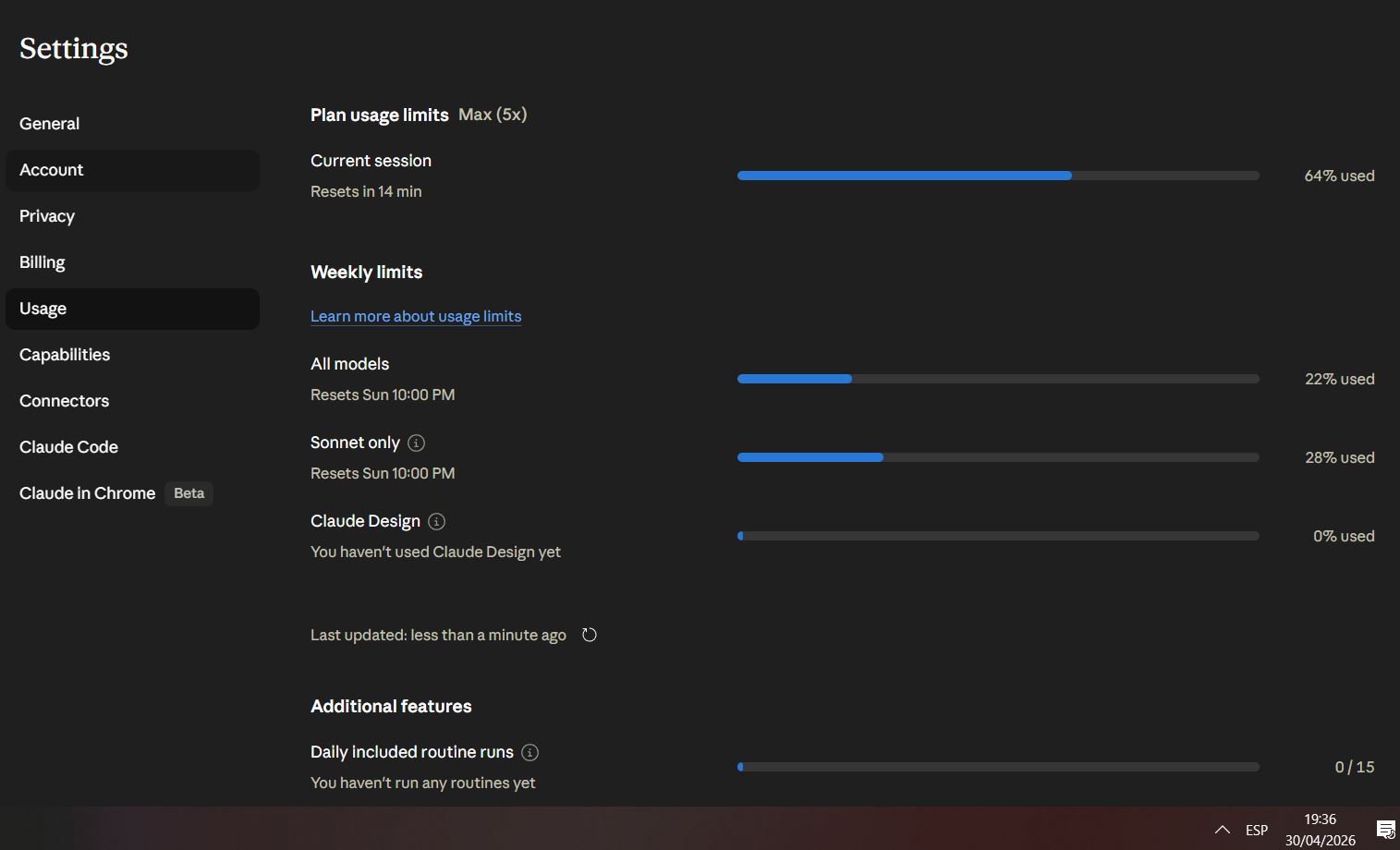
If you've used Claude Pro heavily, you know the feeling. You're deep in a build, momentum is up, the pieces are starting to connect — and then the window closes. You can't send more messages until the limit resets. Thirty minutes. An hour. Sometimes more.
It doesn't break the project. It breaks the flow. And flow, in a build sprint, is nearly everything.
I upgraded to Claude Max x5 at the start of week three. The difference wasn't subtle. Two things changed immediately:
- No rate limit windows. With Max, the ceiling essentially disappears for normal working sessions. You can go for hours without interruption. You stop planning your prompts around "will I have enough capacity for this?" and start just building.
- Noticeably faster responses. Max generates answers significantly faster than Pro on the same questions. In a short session, the difference is barely felt. Over four or five hours of active coding, it adds up — twenty, thirty minutes of just not waiting. Across a full week of building, that's hours recovered.
The upgrade cost an attributed $20 for that week. In exchange, it returned roughly a full week of build time — fewer interruptions, faster output, more continuous thinking.
That math is easy to justify when you're trying to launch fast. Whether it stays easy to justify once the project moves to a slower maintenance pace is a different question. One I'll answer next month.
The Plan for Month 2: Testing Everything
Here's where this article becomes a commitment, not just a recap.
Month 2 is going to be an experiment. Not in building — in the tools I use to build. Three things I'm testing:
- Anthropic API. Pay-per-use instead of a flat subscription. If my usage in month 2 is lighter — more maintenance, fewer new features — the API could cost a fraction of what I paid for Max. I've already written about why the API can cost up to 10x less for the right usage profile. Now I find out if my profile fits.
- DeepSeek API. A model that costs a fraction of Western alternatives and performs surprisingly well on coding tasks. The question isn't whether it's cheaper — it clearly is. The question is whether the output holds up when I'm relying on it for something I'm actually shipping.
- Cursor. A different IDE experience entirely. VS Code with Claude Code is what I know. Cursor is what I haven't tried. The tool has a strong reputation among developers who build fast. I want to form my own opinion, not inherit someone else's.
To win, you have to risk. Staying comfortable with what works is how you overpay forever.
The Meta-Irony of This Project
Pickurai exists to help people find the right AI for their situation. The whole premise is that not every tool is right for every person — that the best AI for you depends on how you work, what you need, and what you're willing to pay.
In month 1, the person who built that project used one tool, didn't compare alternatives, and paid a subscription rate that almost certainly has cheaper equivalents for his use case.
I'm aware of the irony.
But I'd argue this is actually the right way to start. You don't begin with the cheapest option. You begin with the option that lets you move fastest — because a project that ships at $115 is worth infinitely more than a project that gets abandoned at $30 while you're still evaluating tools.
The evaluation comes next. That's what this site is for.
What "Cheap" Actually Means in 2026
The price of a subscription is not the price of software anymore.
Claude Max x5 costs $80 a month. A mid-level developer in Europe runs between €400 and €800 per day. At €400 per day, you'd burn through the entire annual cost of Max x5 — roughly $960 — in 2.4 working days.
That's the actual comparison. Not "is the API cheaper than the subscription." It's "what does $80 a month of AI capacity replace when measured against the real cost of the alternative?"
The answer is tens of thousands of euros per year in development capacity. For anyone building products, that's not a cost. It's the best return on investment in the history of software.
The subscription debate — Max vs Pro, API vs flat fee, Claude vs DeepSeek — is a real debate worth having. But it's worth having in the context of what you're replacing, not in isolation.
$115 to build and launch a product. That number isn't remarkable because it's cheap. It's remarkable because three years ago, it was impossible.
The Short Version
- Total cost, month 1: $115 — $10 (Claude Pro, 2 weeks), $20 (Claude Max x5, 1 week), $85 (domain). Hosting is free.
- The upgrade was worth it. Claude Max x5 is faster and has no rate limit windows. At sprint pace, that combination recovers real build time. At maintenance pace, it may not be necessary.
- Month 2 is an experiment. Anthropic API, DeepSeek API, and Cursor are all on the list. A site about finding the right AI tools should actually find the right AI tools.
- The real comparison isn't Max vs Pro. It's $115 vs €15,000. Everything else is a rounding error.